It's my business to help your business.

Simpledesktops.com

Simpledesktops com

Had to post this link to simpledesktops.com, even though the brilliant Swiss-Miss already posted it.

I’m rocking both the Tron bike wallpapers, because I dig on dark backgrounds for my screens. :)

Go check it now!

A quick design… Building Direction

It’s been a while since I have had much time to produce a half-decent Photoshop piece recently… There has just been too many things on at the moment, which of course is great, because it’s always good to be designing.

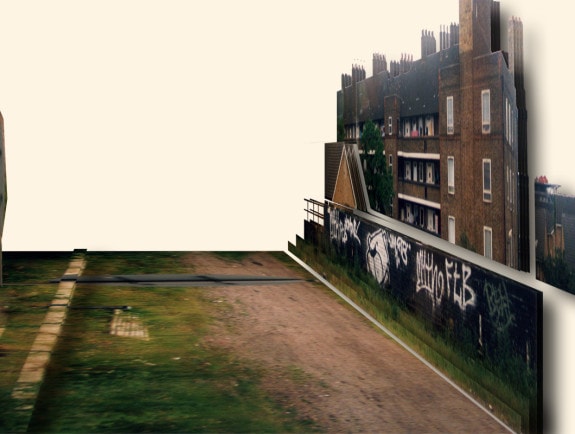
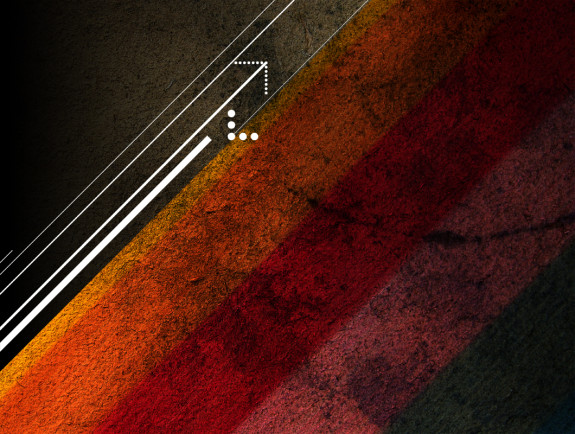
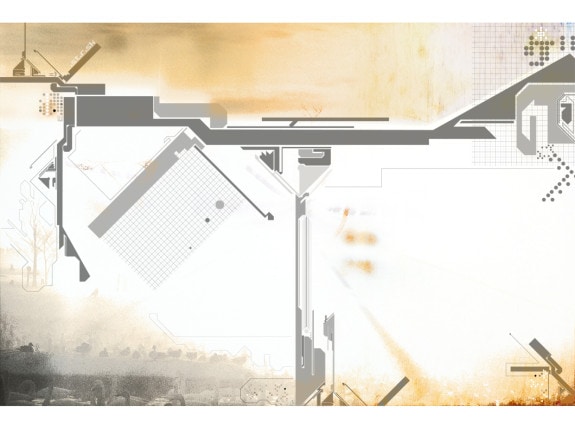
Anyhow, on to the picture. The photos were taken a long while ago at Liverpool Street in London, I really enjoy the buildings in London, and these are very angular and the structure is appealing.

Also, this is (in feeling at least) very similar to the work that I started really developing my Photoshop skills with. A mix of vector, pixel and text, some sarcasm, some truth, a bit of thought for the title.

I like the starkness and contrast. Initially I had this sort of outcome in mind, but wanted more colour and sweeping shades, but I think this has turned out nicely, even if it’s not groundbreaking. Also, it’s a start in the progression towards the work that I had really loved producing way back when. And that is a lovely feeling – it’s rejuvenating to design something like this.

Shooting the details…

Sparklinglight

It’s taken me about a week, just to get to this post… I saw this photographer mentioned on Abduzeedo, and had to take a look.

Mikko Lagerstedt is a designer and self-taught photographer, and his pictures capture great feeling, which is crucial. I really enjoy his work, especially the “Details” gallery.

Going to mobile…

I try to keep an eye on my Google Analytics data. I have two (free) apps on my iPhone for it. “iSpy Analytics,” and “Analytics”

I have noticed over the last 2 months or so – partly by necessity, partly by habit – I check my data more thoughtfully and tenaciously on my phone than on the computer through the browser. Why?

  • Google Analytics uses flash to display its data
  • The iPhone is always with me
  • I dont need to log in
  • I can show other people the results
  • I don’t want to add another tab to my browser just for that task

Notice that none of these has anything to do with the quality of the data. The amount of information available using iSpy (which is far the app I use most often) is less than from the Google website. It’s everything to do with the quality of the experience of accessing the data.

The information is important to me. But there is just something about accessing it through the phone which is just better. I think it would be even better if I had an iPad, but that is a story for another day.

Getting Started

For me, I think there are a number of inherent difficulties with this act. Some of the biggest are understanding why you should start, how you should start, and ending. I put the “ending” in quote marks because the truth is, most projects don’t really end.

Lets take a look at these in order.

Why? not what?

This is often more difficult than we realise. So you feel that there is some need for some “thing“. Let’s say we are talking about my website. There is some need for an online presence for me and my company, in order for people to find me and (hopefully) invest in their company’s design and printing materials through Blue Eye. But just to say “I need a website” is quite different from having a portfolio and blog built to represent a person and their ideas.

Ok, the need for a website is a rather easy, obvious need. But really understanding the “why” helps to inform the “what” in this equation. The why for me might be completely different for you, but the system seems to be pretty constant: Understanding the why equals what. It’s quite pragmatic in that respect.

Knowing that a blog requires a level of commitment, knowing that pictures must be web-friendly, knowing that the site design and general layout  must all be considered and manipulated in order to reach an acceptable outcome. This in itself requires commitment.

Whatever your project is, it would be the same – commitment. You know this already.

A false-start becoming the way to start

Often, instead of starting, we try to figure out what we should do to get started, we get the right pens, and papers, and put our coffee in the right spot on the desk, and dream about the wonderful outcome, and maybe write some notes, and then look at a blank screen with a flashing cursor and….. Nothing.

What should we do? We should actually start. Sometimes what is needed is literally the act of getting moving. Not preparing to move, but moving forward on the project itself which naturally forces changes to happen.

When I was in school, we had a method of essay writing that I could never properly get to grips with… We were meant to write a brief outline, using numbers and letters to designate the paragraphs and sentences that we were going to create later. I can see the point of this, but never did well at it. What did I do? I wrote my semi-final version, edited it on the fly, and then made my outline to agree with what I had already written. I would tend to know the general, final finished product in my head, the writing itself was the thing that made it solid – not the outline.

You can edit Something, but you can’t edit Nothing

The key to “ending” is both wrapped up in the “Why?” and in the way to start. You see, almost everything has a point to aim at. The ending is wrapped up in the beginning. Which level do we aim for? Meh/OK/Superb? I believe that the aim should be the Superb, but the first editable version might be OK at best, and very probably it will be Meh.

That’s where revision and iterations come in to play. In the example above, my final draft was never good enough to be the real final version. Even if it was “written in neat.” Purely because there is always something to improve. Editing, and re-editing will refine the decisions that were made which brought the thing to where is it at this stage, and will make the “final” version better. The key to this is always holding the original reason for the project close. If you really understand that, then it should shine through. So where do you end? When your good passes better, and the better is meeting best.

The thin line of caution

I believe that there is a great problem in not going for the best, purely because we should generally just try to do the best that we can in life. However, there ought to be a cautionary balance between knowing that the best is extremely difficult to attain on the first version of anything. The danger here is in falling on either side of a very thin line – it’s very easy to not start at all due to fear of publishing a sub-standard thing, it’s also very easy to publish a sub-standard thing purely because “Well, at least I’ve done something.” It’s a balancing act.

So why all of this anyway? Because maybe I’m not the only one in the world who needs to remind themselves that even if they don’t have the very, very absolute best version of whatever thing they are working on – it is worth the work of building it. The act of making will highlight those things that can be improved on, until you can show the world the thing that you have made — even if it’s not perfect — is a thing that was created and not some accident. And that is a marvel.